Sunday, February 21, 2021

COVID-19 Exacerbates Inequality among Colleges


COVID-19 has exacerbated inequality in many ways, including in college applications.  As The New York Times reports in "Interest Surges in Top Colleges, While Struggling Ones Scrape for Applicants," applications to elite schools have surged by over 17% (due in part to their decision to make standardized test scores optional), while at many less well known schools applications have fallen considerably, putting some that are struggling due to COVID-19 funding cuts at greater risk of failure.  

Meanwhile, while more affluent students have wider prospects, the less affluent seem to be forgoing college in greater numbers, with declines in applications from first-generation students and those who qualify for fee waivers.  According to Doug Shapiro, the vice president for research at the National Student Clearinghouse Research Center, which publishes educational reports: “We saw the largest declines by far among students from low-income high schools, high-minority high schools, urban high schools, who ordinarily would have gone to community colleges this fall, and who just vanished,” including among those applying to community colleges (which were among schools facing declines in applicants).  

The one bright spot in the report, though, is that minority applications to elite schools are up considerably, driven in part by their new ACT- and SAT-optional policies, which means that these schools will likely see greater diversity among their applicants.  

Saturday, January 23, 2021

PBS's "Rethinking College" Series Tackles COVID-19's Impact on Student Mental Health

"How the pandemic is impacting college students’ mental health" (January 19, 2021) is the latest installment in PBS News Hour's excellent and long-running series, Rethinking College, and probably one of their most compelling.  The series, written and narrated by Hari Sreenivasan, concludes next week with a story on ways that colleges increasingly provide short-term programs and skills-based credentials to help students land jobs. Across over 100 episodes, the series has covered nearly every imaginable issue related to higher education and is very much worth exploring for students in search of a good topic for the final project.

Monday, February 17, 2020

More Evidence of the Merit-Aid Arms Race


In our online discussion of Caitlin Zaloom's chapter on "Enmeshed Autonomy" from Indebted, several students commented on the disturbing evidence that merit-based aid at public institutions is rising faster than need-based aid.  This is just one of many ways that the increased competition between public institutions, spurred on by privatization, advantages students from more affluent families. As Zaloom writes:
Through "enrollment management" ... colleges and universities sort students to achieve an optimal balance of higher-paying students and lower-paying ones.  Ideally, this process would free up aid funds for lower-income families after higher-paying students were enrolled.  In fact, the opposite has happened.  The expansion of merit aid has led colleges and universities to give preference in admission to students from middle-class and upper-class families whose grades and test scores reflect their class advantages and has directed scholarship funds toward attracting them.  Instead of increasing resources for low-income students, merit aid curtails them. (Zaloom 101).
She goes on to mention a study at one flagship state university that showed that "so much ... money was going to students from well-off families that the lowest-income students actually paid more on average than other students higher up the economic ladder" (Zaloom 101).  That study, titled "Undermining Pell: How Colleges Compete for Wealthy Students and Leave the Low-Income Behind" (PDF available through ERIC), was conducted by Stephen Burd of the New America Foundation.  Burd has a new study titled "Crisis Point: How Enrollment Management and the Merit-Aid Arms Race Are Derailing Public Higher Education" (PDF via The Chronicle) which seems to offer an even more complete survey and analysis of this disturbing trend for anyone interested in exploring this issue as part of their final papers.  

Additional commentary here:

Saturday, February 1, 2020

The Birth of American Football

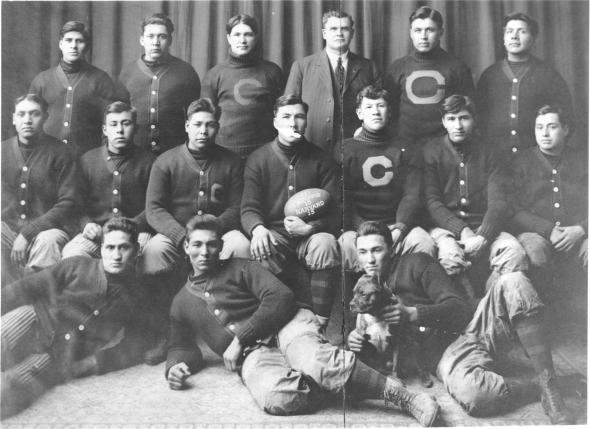
1911 Carlisle team under Pop Warner

This Super Bowl weekend, I found myself listening to an interesting program on National Public Radio's Radiolab about the birth of American Football (January 29, 2020).  Though Rutgers certainly claims credit for the "First Intercollegiate Football Game," we know that the game that Rutgers won over Princeton looked a lot more like rugby than the American Football that we know today.  The program focuses on the evolution of the game, which began at the collegiate level in the late 19th and early 20th century, when it was dominated by the Ivy Leagues (especially Yale and Harvard), and still very much like rugby, but popular because it was thought to help create fully rounded and "manly" men.  The rules changed, though, after the rise of Carlisle Indian Industrial School, where Richard Henry Pratt and, later, Glenn Scobey "Pop" Warner helped to change the rules so that the faster but lighter Native American players would be better able to compete with the bigger Ivy players.  I had some exposure to the importance of Carlisle from the PBS documentary, Jim Thorpe, The World's Greatest Athlete, which also touches on the way that Carlisle used football for fundraising and recruitment purposes (in ways familiar to us today).  But I really learned a lot from this program, which also talks about the rising awareness of concussions in the sport.
x

Tuesday, January 21, 2020

First Generation Students Documentary


Returning to teaching "Research in the Disciplines: College!" after a long hiatus, I am out scouting for the latest documentary films.  "A Walk in My Shoes: First Generation College Students" interested me because my focus this semester is on the ways that increased privatization has made family support an increasingly important factor in student success.  The issues that first-generation students confront would make a good final topic, as several students who have taken my class over the years have shown.

Tuesday, December 5, 2017

Extra Credit: Grad School Meeting


Here is an extra credit opportunity, which might be especially valuable for any students who are thinking of going to graduate school in the future.  To get one point extra credit, you need to register for, attend, and post a blog about this event (ideally with a photo):

Beyond the Baccalaureate: A Look at Rutgers Graduate Education
Wednesday 12/6, 4:30 p.m.-6 p.m.
Academic Building, Room 4225
15 Seminary Pl.

Registration is important, as if there are a lot of students interested (and there may be) the event may be moved to another location.  And there may be a lot of interest, as several articles have gotten students worried:


Basically, the version of the Tax Bill that passed the House of Representatives at a midnight session on Friday into Saturday has graduate students and grad programs worried.  As proposed, that bill would tax graduate students on their tuition remission as though it were income.  Tuition remission is money that graduate students never see as income, but it can be a very large amount -- as much as $50,000 per year at some institutions.  And because most graduate students are living on much smaller stipends (often from $20 - $30,000), if they were taxed on their tuition remission it could double or even triple their annual salaries and cost them more than they can afford in taxes.  Of course, the House bill does have to be reconciled with the bill that passed the Senate, which does not include this provision, so it is possible that this change in the tax code could be eliminated in committee.  But there is also a significant chance that it could go forward, in which case it would really alter the landscape of graduate liberal arts education in this country in many ways -- most of all by making it practically unaffordable for any but the wealthy, or perhaps for international students.

The meeting will likely feature lively discussion.

Saturday, October 14, 2017

"It's on Us" to End Campus Sexual Assault


The full presentation, which is worth watching, can be found at the Rutgers University Facebook page.  I have great admiration for the bravery of all those involved. Former VP Joe Biden reminds us of how far we have come in such a short time, and therefore how dangerous this moment is as the backlash builds against the Obama advice on Title IX outlined in Biden's famous "dear colleague" letter of 2011 (which has since been supplanted and rejected by the current administration's 2017 guidelines).

Tuesday, September 12, 2017

Online Discussion #2 - Due September 19th


After reading the introduction and optional chapter from Armstrong and Hamilton's Paying for the Party and Rebekah Nathan's "Student Culture and 'Liminality'" from My Freshman Year, please reflect on one of the questions below regarding the way privatization exacerbates inequality.  You may also use ONE of the readings from last time, especially for the second question. 

Answer one of the following in the comments section below, making reference to two readings, and then respond to someone else for the full two points participation credit:

Question Option #1: To what extent and in what ways is college less of a 'liminal' space for self-discovery or personal transformation under privatization?
In the excerpt from her book My Freshman Year, Rebekah Nathan discusses how the cost of college seems to have changed the experience of today's students by making college less a place for free exploration and self-discovery and more a place to focus on preparing for the job market or worrying about money.  And, with the rise in prices, the possibilities of social class mobility, which is another promise of "liminality," may be endangered.  How does Nathan's argument connect to the story of a particular student or particular students from Armstrong and Hamilton's book, and what does their example suggest about Nathan's thesis?  Is college no longer a 'liminal' space of freedom or transformation between childhood and adulthood? Is "the party pathway" one example of how students explore their liminal position or how they refuse real transformation?  Is it still possible to make college a place where people can freely choose who they want to become or how they want to live -- or how they can think and live freely (which is the essential meaning of "the liberal arts")?  How do "adult realities" intrude on the liminal space of college for some students, especially "strivers"?  How does Amstrong and Hamilton's subtitle, "How College Maintains Inequality," speak to the way the institution of college participates in an increasing social stratification that inhibits mobility?

Question Option #2: How does privatization increase pressure on less affluent students and/or increase the value of family resources?
Who is most harmed by privatization?  Who gains competitive advantage?  And how exactly does that happen?  Examine a particular case discussed by Armstrong and Hamilton that shows how less affluent students are affected by the increased pressures of college costs and/or how more affluent students are insulated from economic pressures and gain other economic advantages from their family wealth.  If you want to carry your analysis of family resources further in preparation for the Analytic Essay, make a connection to Melinda Cooper's chapter that we read for last class.  How does Cooper's argument about the increasing importance of family resources under privatization help to explain evidence from particular students discussed by Armstrong and Hamilton?

Respond to this question using the comments feature below, making direct reference to two of the readings in your comment, before we meet on Tuesday.  Then comment on another student's comment by the end of the week.

Tuesday, September 5, 2017

Online Discussion #1 - due September 12th


As we see in Melinda Cooper's “In Loco Parentis: Human Capital, Student Debt, and the Logic of Family Investment,”  Steve Mims's documentary film Starving the Beast, and Scott Carlson's article "When College Was a Public Good," higher education is a highly politicized arena for debate which reflects many of the political, economic, social, and racial divisions in society.  Using two of the readings for today, address one of the three question options below.  Please post your response (using the comments section at the bottom of this post) before we meet on Tuesday, September 12th at 4:30 pm.  Then respond to at least one other student to get the full two points participation credit.

Question Option #1: Diversity - How have changes in the funding of college impacted diversity, especially affecting minorities?  What evidence from the readings do you find most compelling in supporting your view?
Which do you find most compelling: Carlson's argument that funding cuts were motivated by racial politics or Cooper's argument that the goal of funding cuts was to shift the burden of "deficit spending" from government to the family which then impacted those groups indirectly?  Or is it some combination of the two?  Or are there other angles on the issue? 

Question Option #2: Fundamental Differences - What are the fundamental differences in thinking between academics and politicians on the political right and left?  And how do those differences affect the way they think about higher education and the policies they put forward?
Cooper discusses academic debates among economists as well as the arguments about education that their theories inspired, Carlson discusses political debates about the funding of education, and Mims's film lets major players in the current debates about college explain their thinking and strategies for accomplishing their goals. Looking at two of our readings, answer the following: What sides can you identify in the debate about who should be responsible for paying for college?  What principles, evidence, or beliefs seem to motivate their positions?  How should we understand the terms of the debate?

Question Option #3: Political Strategies and Tactics - What sort of political and economic tactics have been applied in the arena of higher education in order to accomplish specific strategic goals?  Point to specific evidence from two readings in your answer.
What tactics of "disruption" are employed at universities to achieve more rapid change, as shown in Mims's film?  What tactical arguments are used to sell or successfully frame major policy changes in higher education?  How did Reagan, for example, exploit campus protests to achieve his agenda?  How do "dog whistle politics" work, according to Carlson? 

Question Option #4: Freedom of Speech and Protest - How have government policies had a direct or indirect impact on freedom of speech on campus?
How may the shift of college costs from the state to the family have been motivated by the fear of anarchic student speech and protest according to Cooper?  How might "trigger warnings" and the desire to insulate students from speech (discussed near the end of Cooper's piece) be interpreted?  
How is freedom of speech for professors at issue in Mims's film?  What connections might be drawn between two readings in discussing this issue?

Respond to this question using the comments feature below, making direct reference to two of the readings in your comment, before we meet on Tuesday.  Then comment on another student's comment before we meet again.

Tuesday, January 24, 2017

Online Discussion #2 - due January 31


College debt in the U.S. is rapidly nearing a staggering $1.5 Trillion, becoming a hidden drag on the economy and a secret drag on many people's lives.  I say "hidden" and "secret" because most Americans do not talk about their debt in public, and therefore few of us recognize just how widespread a challenge it is.  Our readings today offer us insight into why student debt has increased and how it shapes the lives of college graduates.  

After reading the selections from Ken Ilgunas's Walden on Wheels: On the Open Road from Debt to Freedom, the excerpt from Rebekah Nathan's My Freshman Year, and (optionally) chapters from Alan Collinge's The Student Loan Scam or Armstrong and Hamilton's Paying for the Party (all available in the Resources -- Required Course Readings on our Sakai site), please reflect on one of the questions below regarding student debt by making an original connection between at least two of them.

Answer one of the following in the comments below, then respond to someone else for the full two points participation credit:

Question Option #1: "In what way (or ways) is college no longer a 'liminal' space for self-discovery?"
In the excerpt from her book My Freshman Year, Rebekah Nathan discusses how the cost of college seems to have changed the experience of today's students by making college less a place for free exploration and self-discovery and more a place to focus on preparing for the job market or worrying about money.  How does Nathan's argument connect to at least one of the other readings for today, and what does that reading suggest about Nathan's thesis?  Is college no longer a 'liminal' space of freedom between childhood and adulthood? Is "the party pathway" one example of how students explore their liminal position?  But is it the best way for those who can afford it?  Is it still possible to make college a place where people can freely choose who they want to become or how they want to live -- or how they can think and live freely (which is the essential meaning of "the liberal arts")?  Would you say that Ken Ilgunas's story illustrates how some college graduates are extending the possibilities of liminality?  For this question, you might reference Armstrong and Hamilton's book, including Chapter 6 on "Strivers" which connects very well with Nathan's argument about how "adult realities" intrude on the liminal space of college for some students.

Question Option #2: "Does debt destroy freedom?"
Based on the readings -- and citing specific evidence from two of them -- answer at least one of the following questions:  How does debt affect the "freedom" (a key word for Ilgunas) of debtors?  Do students make free choices that get them into debt or is it a trap they are forced into?  How is debt sometimes caused by limited choices -- and how does being in debt itself constrain choice?  How can debtors regain or reassert their "freedom"?  How does Ilgunas's description of the liberal arts (especially in his graduation speech) connect to his view of "freedom"?  What do you think students can do about the growing problem of student debt and the larger problem of income inequality it exacerbates?  Or does debt make it too difficult for graduates to worry about anyone but themselves?

Question Option #3: "To what extent are colleges in cahoots with the banks?"
Especially in Collinge's chapter on the privatization of Sallie Mae and in Ilgunas's anecdotes about his best friend, Josh Pruyn, who goes to work for a for-profit school, we see how colleges at least feed the private banking industry and sometimes eat at the same trough.  How does the relationship between colleges and banks connect to the theme of privatization we have been discussing?  How and why can private interests damage higher education in these cases?

Respond to this question using the comments feature below, making direct reference to two of the readings in your comment, before we meet on Tuesday.  Then comment on another student's comment.

Monday, January 16, 2017

Online Discussion #1 on "Privatization," due January 24th

In his essay "The Price of Privatization," from The Great Mistake: How We Wrecked Public Universities and How We Can Fix Them, Christopher Newfield uses the term "privatization" to describe what is happening to American higher education due to the widespread withdrawal of state support and the turn to private sources of funding (especially tuition).  This turn to the private can be contrasted with the idea of "public good," which is the focus of "When College Was a Public Good," where Scott Carlson points out that the decline of public investment in higher education and the rise of diversity among college students are inversely correlated, perhaps because the elite feel less inclined to support programs that are not for people like themselves.

In their book Paying for the Party: How College Maintains Inequality, sociologists Elizabeth Armstrong and Laura Hamilton describe how college magnifies relatively small differences in family background and income, so that students from less affluent families find themselves at a disadvantage in making social connections, gaining membership in Greek life, affording time for academics, and successfully pursuing the most challenging professional pathways (where support from parents is practically essential). 

Choose ONE of the following questions and use ideas related to the rise of privatization (Newfiled) or the fall of public support (Carlson) to help explain a specific example from Armstrong and Hamilton's study that illustrates that idea.  Try to make an original connection between two of the readings in your comment.  Then post a comment on another student's connection.

1. Privatization and Social Engagement or Isolation.
How might privatization compound the problems faced by less affluent students in making lasting social connections at college and why does that matter? Some related questions you might consider: 
How does social class background impact how well students fit in socially?  How does successful social engagement translate to academic success in college and economic success after college?  What are the downsides of too much social engagement, and why do some students suffer those downsides more than others?   

2. Privatization and Social Reproduction or Mobility.
How exactly do private resources impact who will have the most academic success at college and the most long-term gains in income because of that?  Armstrong and Hamilton suggest that social and economic backgrounds seem to foretell who will or will not reproduce the social class of their parents or, even more challenging, achieve social mobility.  How exactly do private resources or a lack of public support make the difference here?

Use the comments feature below and make direct reference to the readings in your comment (which must be posted before we meet on Tuesday).  Then respond to another student's comment (you may need to come back later and the second comment is due by 24 hours after we meet as a class).  You must post and comment to receive the full two points participation credit.  Note: if you post anonymously, please sign your post with at least your first name.  

Monday, September 5, 2016

Two College Sports Documentaries

There have been a number of college sports documentaries.  Two recent ones that examine the business of college sports include:

Schooled: The Price of College Sports, inspired by an article by Taylor Branch and available on Amazon and other online sites:


The Business of Amateurs which was just released on Amazon and elsewhere.


If you are planning to write about college sports, these would be a good place to start.  I would also strongly recommend you get a copy of Indentured: The Inside Story of the Rebellion Against the NCAA by Joe Nocera and Ben Strauss.

The Hunting Ground

This film is now available on Amazon and other online sites.


If you are interested in the subject of campus rape, watching this film would be a good place to start.  I would also strongly recommend the book Missoula: Rape and the Justice System in a College Town by Jon Krakauer.

Tuesday, July 29, 2014

Ivory Tower

This film is now available from Amazon and other online sites.


Tuesday, March 11, 2014

New Tools to Simplify Library Research

When I was a college student, we used to have to look through Reader's Guides to Periodical Literature in book form and then go to the Card Catalogue(!) to find articles and books.  And we used to have to walk miles to school, in the snow, of course -- and they never gave us snow days....  Thank goodness things have changed.  Here are three new tools to make your research easier:


Flow.  Flow helps you collect, cite, manage, and organize research for college papers.  It works like an app, and once you install it you can use it whenever you need it.


Articles+.  This search page gives you some interesting functionality, especially for doing broad searches across several databases.  "Introducing Articles+, a new way to search for articles" explains how it works.


Those looking for free help in putting their citations into proper MLA format should check out "Son of Citation Machine," which is a free (ad supported) internet app that guides you through the process and generates MLA format by just having you fill in a few blanks.  It even tells you how to cite the work properly for in-text citation.  So no excuses! 

Thursday, February 27, 2014

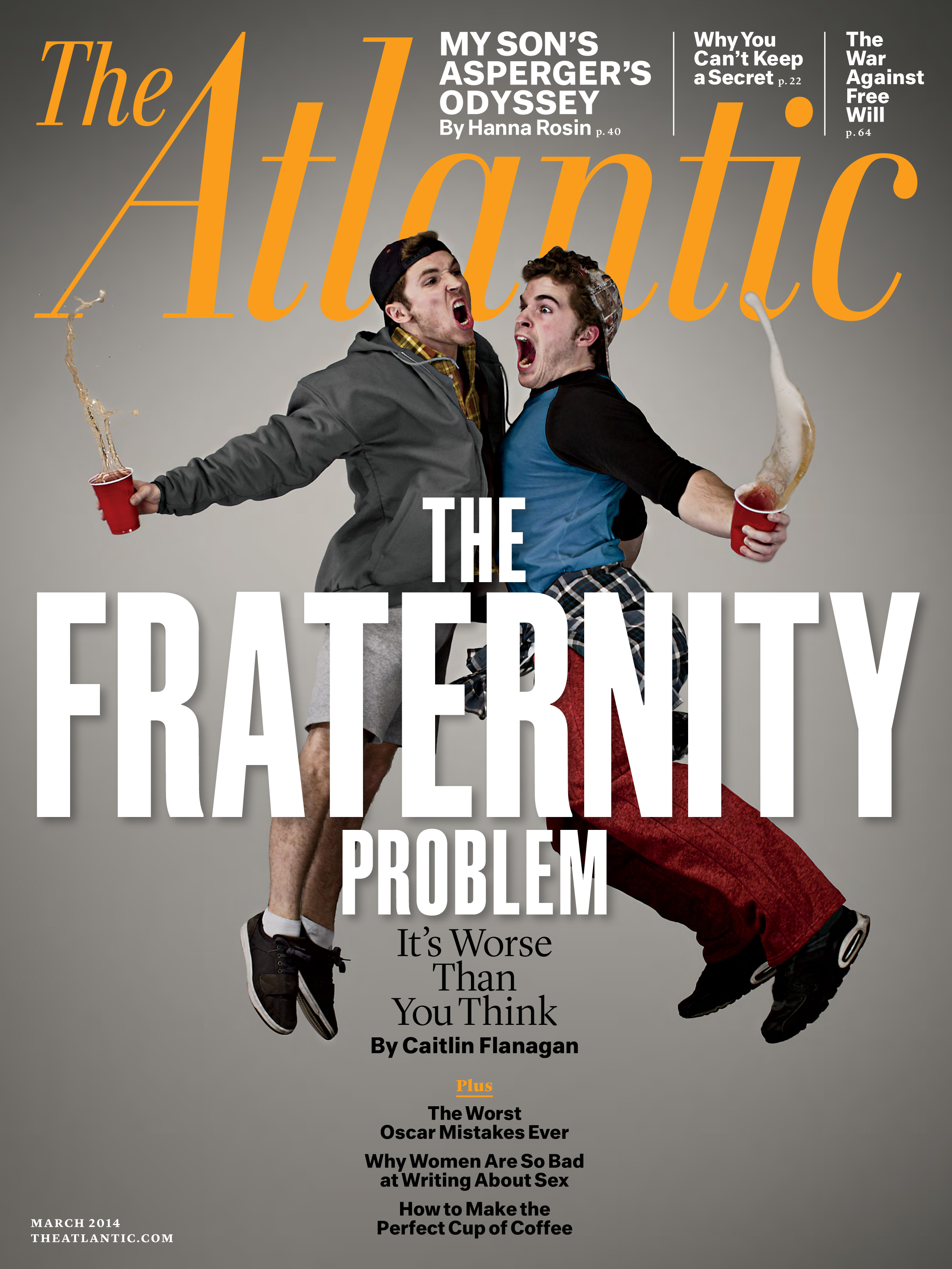
The Atlantic's "Fraternity Problem"


The Dark Power of Fraternities by Caitlin Flanagan (The Atlantic, February 19, 2014) may not be the most positive portrait of fraternities, but it offers a lot of critical insight into the history and increasing prestige and power of these venerable college institutions.  It should also be required reading for anyone who joins a fraternity or attends a fraternity party, as it reveals what the insurance industry has long known: that fraternities are often the site of accidents and injuries--and all of the very costly legal and insurance-related issues associated with them.  The historical and financial details offered by the article make it a must-read, especially for the many members of this class who belong to Greek letter organizations.


Thursday, October 31, 2013

Whither (or Wither) the Humanities?


The decline of the Humanities has been widely heralded, and Tamar Lewin's "As Interest Fades in the Humanities, Colleges Worry" (New York Times, October 30, 2013) does a good job of summing up the current discussion and offering links to some of the major commentaries on this issue.  As someone who teaches a Humanities course, I can definitely speak to the value of the skills that these classes offer -- especially in critical thinking, argumentation, writing, research, public speaking, and (often) the use of communication technologies.  But I can definitely see why, with the current job market and the growth in student loans, students might not want to major in one of the traditional humanities disciplines.  However, for those who worry that our nation is losing its way and that our students are not gaining the sort of critical thinking skills that they need to face the hard choices fast coming upon us, then I point you to Ken Ilgunas's excellent speech upon his graduation from the Duke Humanities program -- much of which is excerpted in his book Walden on Wheels.  As Ilgunas points out, "One does not become free simply by staying out of debt" or, for that matter, preparing to join the corporate world in order to pay that debt back.

Monday, September 30, 2013

"Price of Admission" Gone


Visit NBCNews.com for breaking news, world news, and news about the economy

A student in our class alerted me that "Price of Admission" has suddenly been pulled from the web.  I searched around but could not locate the video online, but I did find excerpts from it (see above), a collection of transcripts from the video, and the complete transcript interspersed with code.  If anyone can find alternatives, please let us know in the comments.  (I'm glad this didn't happen just a couple weeks earlier, of course!)

Monday, July 1, 2013

"We must hate our children"

Joan Walsh's "We must hate our children" in Salon.com today offers a scathing criticism of the way Americans have normalized student loan debt -- a particularly trenchant commentary on this day when the federal student loan interest rate officially doubles.  One striking excerpt:
I used to find it endearing when President Obama talked about how he and Michelle finally paid off their student loans after he was elected to the Senate. But in a way, the president’s folksy anecdote helped normalize what should be outrageous: that we expect young people to go deep in debt, well into middle age, to get a good education. Of course, the Obamas’ story should come with an asterisk, since much of their debt was built up paying for Harvard Law School, and clearly, that paid off for them. The assumption that students should borrow money to pay for an undergraduate degree, and that the only debate is over how high their interest rate should be, is seriously crazy.
Read the rest online here.

Wednesday, June 12, 2013

The Humanities on Decline


Last week's article Humanities Fall from Favor: Far Fewer Harvard Students Express Interest in Field with Weak Job Prospects in The Wall Street Journal has triggered some clucking around the web, but also some rather defensive reactions, such as the questioning of David Silbey in "A Crisis in the Humanities?"  However, it has long been known that Harvard grads are flocking to Finance.  And, as Karen Ho's Liquidated: An Ethnography of Wall Street revealed, even if they major in the Humanities, Harvard grads are likely to at least entertain working for the banks (which increasingly rule the world).